
Articles
Technical and strategic articles about sovereign AI in legal, public procurement, and document workflows. Each article passes through an editorial gate before publication.
0 results
No articles match the search. Try other terms.
Most recent
-

Small AI Models on Your Smart TV: IoT Replication Risk
Eight nodes, one model, zero human assist — GLM-5.2 cloned itself across a fleet of $55 Android TV boxes with 4 GB RAM in an Anthropic study led by William Zhou and Daniel Freeman.
Read more -

RAG for Romanian Legal Corpora: PDF to Cited Query
Romanian legal PDFs break every assumption a stock RAG stack brings from English wiki data. Scanned ordinances from 2003. Diacritics stripped by OCR.
Read more -

Citation-Grounded Legal AI in Romania: No Hallucinations, No CSM Sanctions
A Bucharest lawyer asked a general-purpose LLM for the current wording of Art. 148 CPC last week. The model returned a confident paragraph citing an article number that was renumbered in 2024.
Read more -

A2A vs MCP: Two Protocols, Two Problems, Not Interchangeable
Last week an engineering lead asked me which protocol to pick for a new agent system: Anthropic's Model Context Protocol (MCP) or Google's Agent-to-Agent (A2A). Wrong question.
Read more -

Two-Thirds Report AI Wins, Almost None Wake the CEO
Azeem Azhar polled roughly 160 IT vice presidents this summer. Two-thirds pointed to measurable AI results. Only about eight said the results were significant enough to interrupt the CEO's holiday.
Read more -

Where LLM Cyber Agents Break: Bottlenecks in Multi-Stage Runs
Ask a red-teamer why their scripted attack chain works but their LLM-driven one stalls, and the answer is rarely "the model isn't smart enough".
Read more
All articles by category
Click a category to expand. Or use the search above.
Compliance & Regulation 17 AI Act · NIS2 · CRA · DORA · ISO 27001 · GDPR — articles for compliance officers and legal teams building audit-ready programmes.
-

AspisAI Turns ISO 27001, NIST CSF, GDPR Into Executable Rules
Compliance teams still spend Tuesday mornings copy-pasting evidence into a spreadsheet. A September 2026 arXiv paper proposes something less soul-crushing: AspisAI, a governance framework that treats controls from ISO…
Read more -

DNSC Publishes EVAL_MMS: NIS2 Self-Assessment Becomes Operational
On 27 August 2026, Official Gazette no. 712/712bis enacted DNSC Director Order no. 1/2026, launching three self-assessment instruments for cybersecurity risk management maturity: EVAL_MMS_B, EVAL_MMS_I, and EVAL_MMS_E.
Read more -

EU AI Act: What Went Live This Week and What's Delayed
August 2, 2026 was the calendar date compliance teams had circled for eighteen months. It came and went with less noise than the Act's opponents predicted and more paperwork than its supporters admitted.
Read more -

EU AI Act Amendment: New Deadlines Compliance Teams Cannot Miss
The EU AI Act Amendment hit the Official Journal on 24 July 2026 and became effective on 27 July 2026.
Read more -

DORA, NIS2 & PSD3: The 2026 Authentication Requirements Checklist
What DORA, NIS2 and PSD3/SCA each require of authentication in 2026 - phishing-resistant MFA, tamper-evident audit trails and key management, in one checklist.
Read more -

eIDAS 2.0 & the EU Digital Identity Wallet: What It Means for Your Auth Stack
What eIDAS 2.0 changes, how the EUDI Wallet and ARF work, the OID4VCI/OID4VP/SD-JWT-VC protocols, the rollout timeline, and where this meets post-quantum.
Read more -

EU Sovereign Identity vs the US CLOUD Act: Why Data Residency Is Not Sovereignty
Why US-HQ identity providers stay exposed to the CLOUD Act and FISA 702 even with EU data residency — and what sovereign-by-architecture really means.
Read more -

EU Deepfake Rules Hit Retail: Eurocommerce Demands Exemption
A sofa staged in a sunlit living room, rendered entirely by Stable Diffusion. Is that a deepfake? On August 2, the EU AI Act's transparency rules for synthetic content start applying, and Eurocommerce — the trade body…
Read more -

EU Delays AI Act to 2027: What Compliance Teams Do Now
On 6 May 2026, EU institutions agreed the "Digital Omnibus on AI", a package that pushes the AI Act's high-risk obligations from August 2026 to **December 2027** and product-related rules to August 2028 (European Comm…
Read more -

EU AI Act — how to correctly classify your AI system: minimal, limited, high or unacceptable risk (practical decision tree)
Regulation (EU) 2024/1689: the four risk categories, classification decision tree, obligations per category, and 2025-2027 deadlines for providers and deployers.
Read more -

Cyber Resilience Act (Regulation 2024/2847) — obligations for products with digital elements, vulnerability disclosure, SBOM and security updates
CRA for manufacturers, importers and distributors: the three product classes, substantive obligations, active vulnerability reporting, and the 11 Dec 2027 application deadline.
Read more -

DORA Regulation 2022/2554 — the five pillars for banking, fintech and insurance (with implementation timeline)
Digital Operational Resilience Act: ICT risk management, incident reporting, resilience testing, third-party risk and information sharing. Checklist and 2025-2027 deadlines.
Read more -

EU AI Act: obligations for companies fine-tuning LLMs
What the EU AI Act requires from companies fine-tuning LLMs on their own data: documentation, risk classification, obligations for high-risk systems.
Read more -

ISO/IEC 27001:2022 — migrating from the 2013 edition with the 93 controls reorganised into 4 themes
ISO 27001:2013 → 2022 changes: from 114 to 93 controls, the 11 new controls, reorganisation into 4 themes, and a concrete migration path for already certified organisations.
Read more -

Lexnomia vs OneTrust, TrustArc and Drata — why a US SaaS lock-in is not the answer for a 50-200 person EU company
Direct comparison between Lexnomia and US compliance platforms: real cost, sovereignty, evidence vs PDF, and why European SMBs pay twice for the same controls.
Read more -

NIS2 implementation — operational checklist for essential and important entities (Directive 2022/2555)
Who falls under NIS2, the mandatory Articles 20-23, fines up to 10 million EUR or 2% of turnover, and what you must prove to the competent authority.
Read more -

7 anti-patterns of self-serve compliance SaaS — and how we avoid them in Lexnomia
Free tier abuse, scope creep, PDF without evidence, dashboard theatre, AI hallucination — the classic anti-patterns of self-serve compliance platforms and the concrete fixes.
Read more
AI & RAG 27 RAG · LLM routing · fine-tuning · citation grounding · anti-hallucination — for teams shipping reliable AI products on their own corpora.
-

Citation Grounding in RAG: Architecture and Three Traps for Legal and Audit
Every legal counsel who has watched a model invent an article number knows the feeling. The answer sounds authoritative, the paragraph flows, and the citation points to a regulation that does not exist.
Read more -

In RAG We Trust? Poisoning Halves Fact-Checking Accuracy
A quantized Llama 3.1 8B model that hits 77.9% on FEVER fact-checking collapses to 43.5% when all three retrieved passages are silently corrupted.
Read more -

From PDF to Production: Sub-2% Extraction on Messy Docs
A finance team drops 40,000 scanned invoices into a bucket on Monday and asks for line-item totals by Friday. The PDFs have rotated pages, mixed languages, two-column layouts, and stamps over the amounts.
Read more -

Citation Grounding for Legal AI: Architecture and Three Traps
A retrieval-augmented system that cites a paragraph it never read is worse than one that refuses to answer.
Read more -

RAG on Romanian Legal Corpus: From PDF to Cited Answer
By August 2026, every legal team we onboard asks the same question: why does our internal assistant cite OPANAF 1.581/2025 correctly on Monday and invent a paragraph number by Friday? The answer sits in the pipeline,…
Read more -

RAGSentinel: Geometric Consensus Defense for Poisoned RAG
A retriever that pulls three malicious documents into the top-5 will not tell you it did. The generator speaks with the same confidence it uses on clean context.
Read more -

TRACE: Why Constraint Parsing Beats Bigger Models in RAG
A mid-tier open-source LLM paired with a knowledge graph outperforms a proprietary frontier model without one.
Read more -

From PDF to Production: Structuring Unformatted Documents for AI Extraction Under 2% Error
A finance team hands you 40,000 supplier invoices in three PDF flavors: scanned, digitally-born, and hybrid with stamps on top of text.
Read more -

RAGuard: Two-Layer Defense Against RAG Corpus Poisoning
By mid-2026 the question is no longer whether a retrieval-augmented generation stack can be poisoned, but how cheaply.
Read more -

GraphContainer: One Platform to Compare and Debug Graph RAG
Ask any team running Graph RAG in production which subgraph traversal actually fired on last night's failing multi-hop question. Silence.
Read more -

Cost-Governed RAG: Per-Tenant Accounting for LLM Workloads
Ask any platform team running RAG for more than three customers: who paid for that 4k-token answer? Nobody knows.
Read more -

In-Process Retrieval Turns RAG Into Agent Working Memory
Networked vector stores are the quiet bottleneck inside every language-agent loop. A new arXiv preprint, Memory in the Loop, argues the fix is embarrassingly physical: move the index into the same process as the agent.
Read more -

KidnapRAG: Poisoning the Reasoning Chain of Agentic RAG
What happens when the attacker stops trying to fool retrieval and starts steering the agent's *next question*? That is the shift documented in KidnapRAG (arXiv:2607.00422), a black-box poisoning technique aimed square…
Read more -
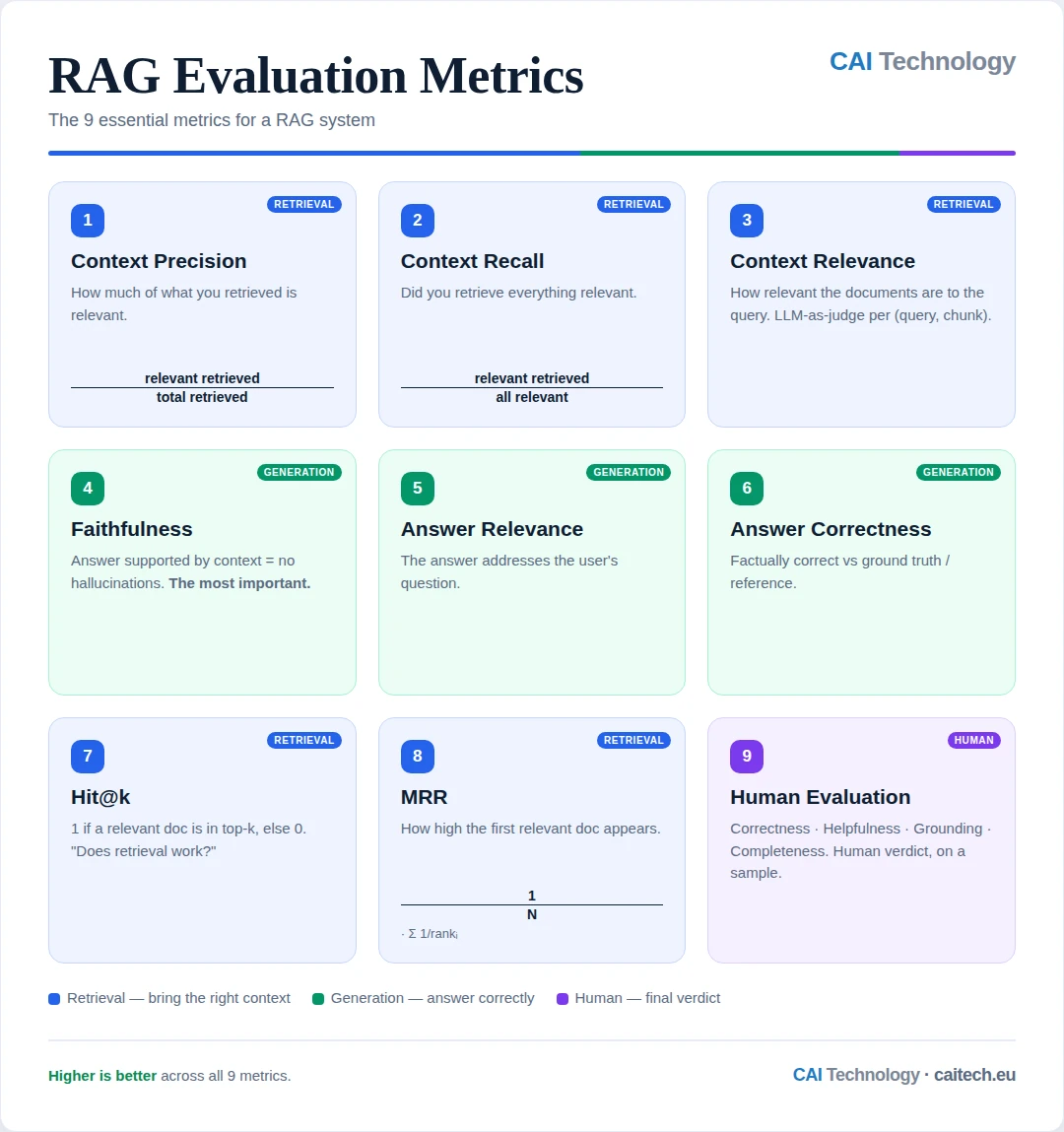
How to Properly Evaluate a RAG System: the 9 Essential Metrics
The 9 essential metrics for evaluating a RAG system, on two axes (retrieval + generation) plus the human verdict — with diagrams, formulas, a troubleshooting table and how to automate them in practice.
Read more -
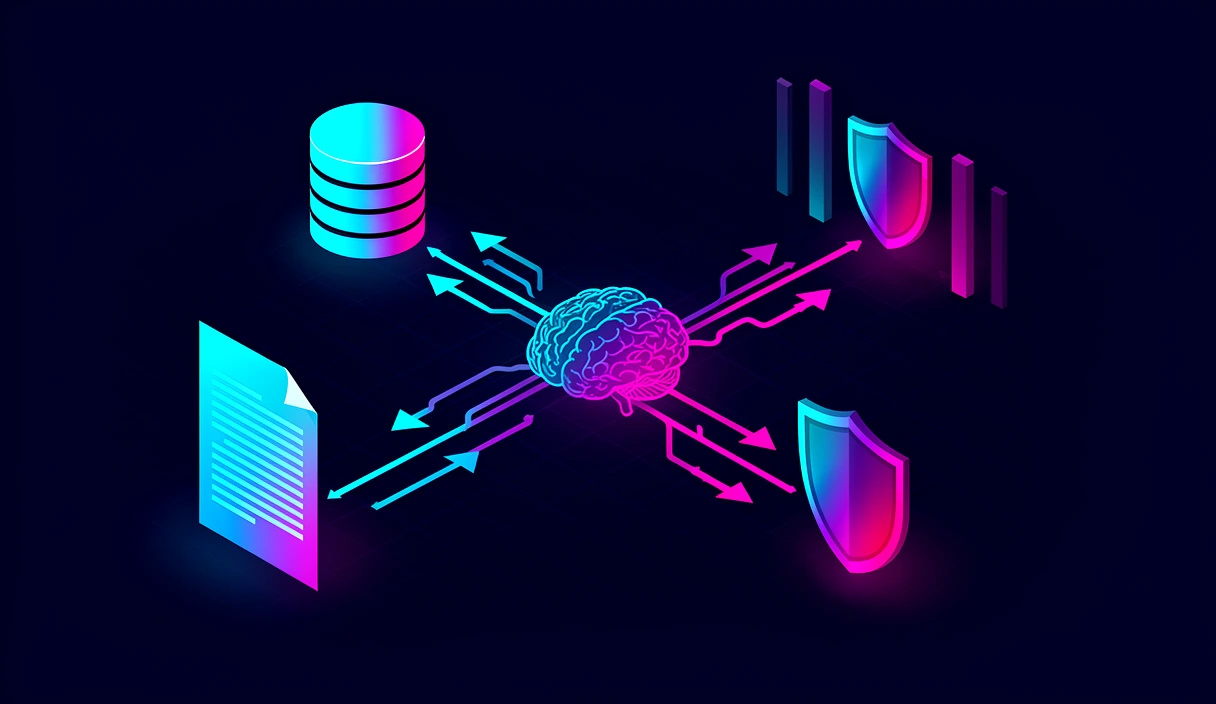
Securing RAG Pipelines: Threats Across Retrieval and Generation
A new arXiv survey (Security and Privacy in RAG, June 2026) maps the attack surface of Retrieval-Augmented Generation across four deployment shapes — centralized, on-device (Micro-RAG), federated, and hybrid — and the…
Read more -

When RAG Hurts: Malware Explanation as Signal Extraction
Three in four malware reports a junior analyst opens are noisier after retrieval than before. That is the awkward finding behind a recent empirical study on Retrieval-Augmented Generation for malware explanation, whic…
Read more -
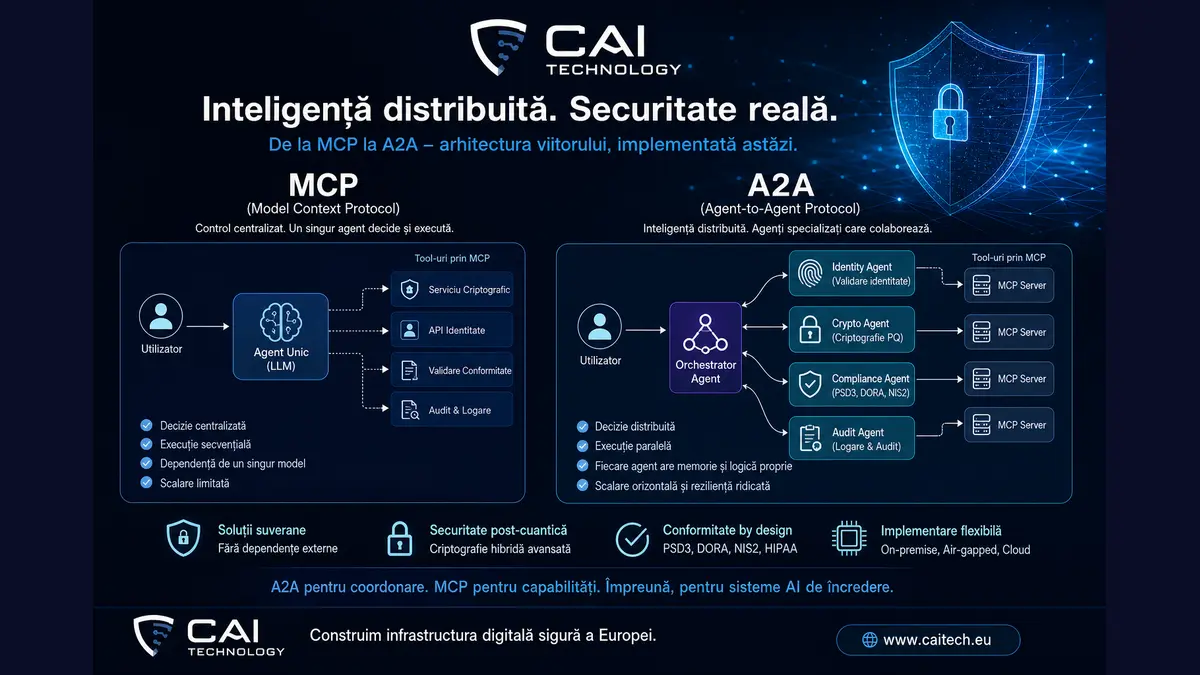
How we use A2A in practice at CAI Technology (and why MCP isn't enough)
MCP standardises tools, A2A standardises cooperation between agents. At CAI we run 12 Demeter agents coordinated through Iris over an MCP layer with 15 tools. Here's how and why, with concrete production examples.
Read more -

Anti-hallucination for legal chatbots: 2.8M Romanian documents
How we removed hallucinations from a Romanian legal chatbot using a citation-grounding pipeline indexed over 2.8 million legislative documents.
Read more -

BYO-LLM adapter pattern: how to avoid lock-in on a single model
Bring-Your-Own-LLM with minimal ~150-line adapters per provider. Why mono-LLM frameworks are rigid, how to drop to a uniform signature.
Read more -
Citation grounding: implementing a 4-gate pipeline
A practical citation-grounding pipeline for legal and procurement RAG: retrieve, answer with citations, validate, return. Full pseudocode included.
Read more -

Cost-aware LLM routing: how to cut 70% of the bill while keeping quality
Smart routing between premium model for design, mid model for work and local models for polling. Pseudocode, decision tree and measured numbers.
Read more -
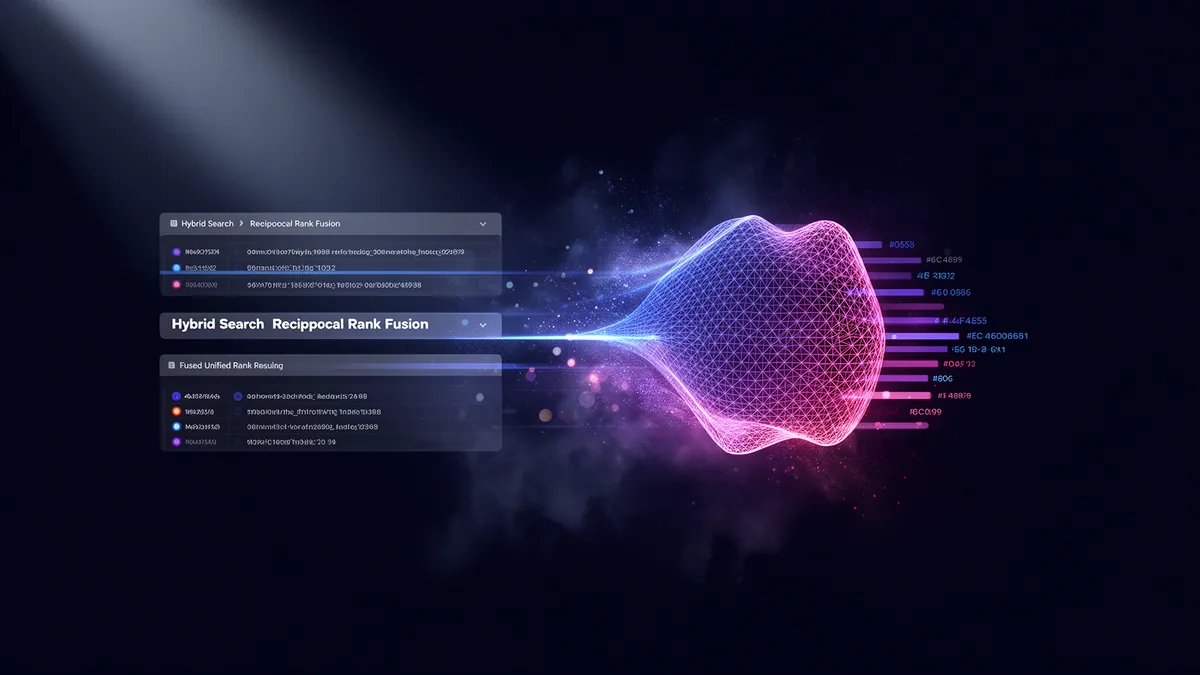
Hybrid search: RRF vs Cohere Rerank vs cross-encoder
Practical comparison of Reciprocal Rank Fusion, Cohere Rerank, and BGE cross-encoder for hybrid search. Latency, quality, cost — when each one wins.
Read more -

Multilingual RAG RO + EN: implementation pattern with BGE-M3
How to build a RAG that answers in Romanian over a mixed RO+EN corpus: cross-lingual retrieval, adaptive prompts, citation language match.
Read more -

Observability of AI agents: what to monitor in production
AI agent dashboard: tokens consumed, latency p50/p95/p99, hallucination rate, tool-use success, audit-log completeness. A practical template.
Read more -
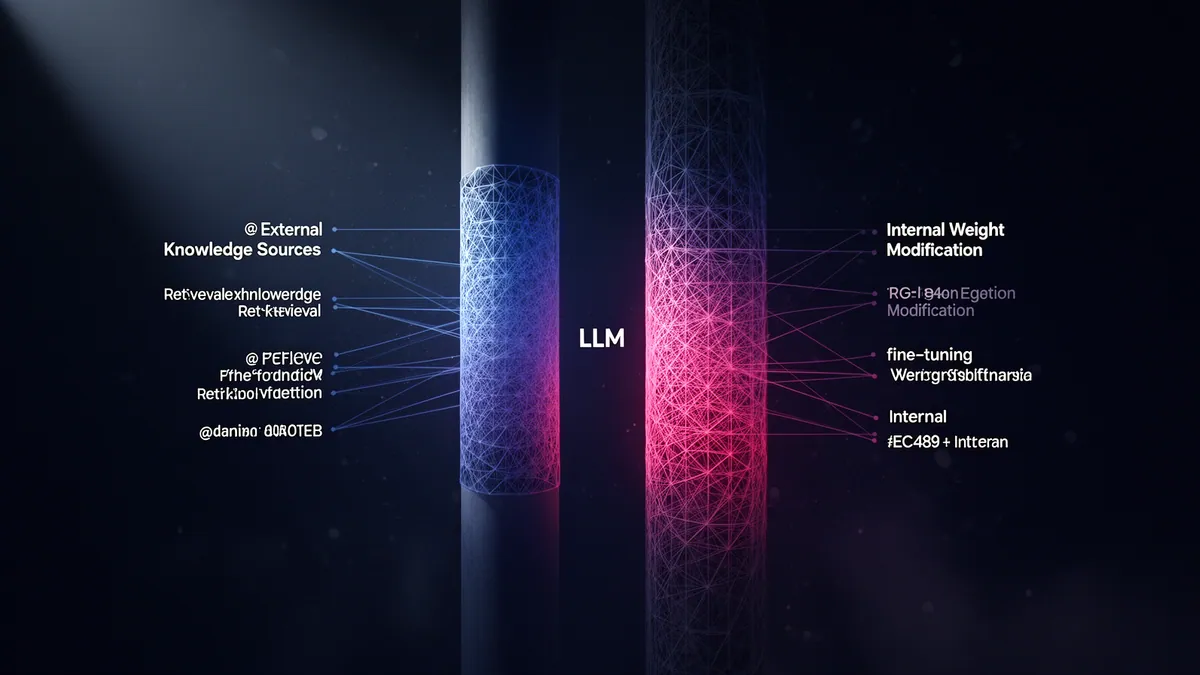
RAG vs fine-tuning in 2026: a decision matrix with real costs
When RAG (large changing corpus, citation needed) and when fine-tuning (style consistency, low latency, narrow specific task). Real 2026 numbers.
Read more -

RAG vs BM25 keyword search: when each is the right call
A CTO decision matrix: when fast, cheap BM25 keyword search beats hybrid RAG, and when investing in semantic RAG is justified.
Read more -

Fine-tuning LLMs on Romanian corpora: real challenges
Why under 0.3% of frontier models contain Romanian, and how to do continued pretraining + SFT correctly on a legal and procurement corpus.
Read more
Cybersecurity & IT Audit 43 SIEM · post-quantum · OIDC · hardening · incident analysis — operational cybersecurity, not just conceptual.
-

SOC Training That Survives Tool Churn: The Non-Perishable Skills Case
Ask any SOC lead what their analysts forget six months after onboarding, and the answer is not "how to query Splunk." It is how to reason about an alert when the tool changes.
Read more -

Structural Containment for Multi-Agent LLM Pipelines
A compromised Validator agent lets 100% of malicious approvals through. Execution stays clean anyway.
Read more -

GIDS-Eval Exposes How Graph IDS Benchmarks Mislead SOC Teams
Two crafted edges. That is all it takes for an attacker to slip past several graph-based intrusion detectors surveyed in GIDS-Eval, forthcoming at ACM CCS 2026.
Read more -

LLM Triage for Mid-Market SOCs: From Hours to Minutes
A 50-person SOC drowns before it fights. ENISA's 2024 Threat Landscape flagged alert fatigue as a top-three factor in delayed incident response across EU mid-market operators (ENISA Threat Landscape 2024).
Read more -

OpenAI Warns: AI Cyberattacks on Critical Infrastructure Are Here
On the same August week that a joint NSA, CISA, and FBI advisory flagged attackers using generative models to hand-craft exploit scripts against Siemens S7 controllers, OpenAI pushed an open letter co-signed by more t…
Read more -

SOC Triage in Minutes: LLMs Over SIEM Alerts for Mid-Market
A mid-market SOC in Bucharest gets 14,000 SIEM alerts on a quiet Wednesday. Two analysts. Do the math — nobody reads them.
Read more -

Autonomous Cyber Defense in SDN: 21 Seconds to Block a SYN Flood
Modern adversaries breach and pivot inside a minute. A new arXiv paper proposes an SDN defense pipeline that detects a SYN flood and installs a blocking rule on the controller in **21 seconds** — well inside the eCrim…
Read more -

STINER: Mining X for Strategic Cyber Threat Intelligence
In April 2025, weeks before SafePay ransomware attribution hit mainstream feeds, the signal was already sitting on X. STINER, a taxonomy plus expert-annotated corpus of 2,100 real-world alerts, caught it.
Read more -

InterSAGE: Trust Substrate for the Internet of Agents
Your agent can call MCP tools, negotiate over A2A, and stream events through AG-UI. It still cannot prove who it is to the counterparty.
Read more -

GraphRAG Beats Vector RAG for Durable SOC Detection Plans
A detection plan built by naive vector RAG survived just 29% of IOC rotations. The same CTI reports, routed through Microsoft GraphRAG, held firing rate at 100% (Nguyen et al., arXiv:2608.13050).
Read more -

Interoperable CSOCs: A Blueprint for EU-Wide Response
A hospital SOC in Cluj sees a suspicious payload at 03:14. The national CSIRT in Bucharest sees it at 07:40 — after a phone call.
Read more -

SOC Practitioners on LLMs: Chasing Ghosts, Missing Attacks
Twenty-five SOC analysts sat down with researchers this year and delivered a verdict most vendors are not repeating on stage: large language models are useful for the boring half of the job, and unsafe for the interes…
Read more -

Graph Optimisation for Active Directory Attack Path Defence
Ask any blue team what keeps them awake at 3 AM and Active Directory shows up before coffee does. A single misplaced `AdminSDHolder` edge or a forgotten `GenericAll` on a nested group turns a phished intern into a Tie…
Read more -

Classical Acceptance Is Not Hybrid X.509 Authentication
Eight X.509 path-validation stacks were pointed at hybrid certificates carrying both a classical signature and a post-quantum credential.
Read more -

Reachability Reasoning Turns CTI Reports Into Executable Attack Graphs
Every SOC has the same drawer: quarterly threat reports from vendors, ISACs, and government bodies, all describing attacker behavior in prose. Analysts read them. Detections rarely change.
Read more -

Ranking SOC Incidents by Risk, Not Severity: Microsoft's AIP at Scale
Any analyst who has drained a Defender queue on a Tuesday morning knows the shape of the problem: two dozen "High" incidents, one that actually matters, and no signal separating them.
Read more -

JADEPUFFER: The First Agentic Ransomware Turns Old Bugs Into New Weapons
On a Sysdig honeypot in mid-2025, an AI model paused for 31 seconds after botching a `CREATE USER` statement, then rewrote the query and pressed on. No human operator was at the keyboard.
Read more -

SoK CIR-IF Taxonomy: What 417 Papers Say Drives Incident Response
Ask ten CISOs why their last incident spiralled and you get ten answers: stale runbook, missing log source, VP on holiday, procurement blocking the EDR renewal. All plausible, none systematic.
Read more -

Network Intrusion Detection Without Deep Packet Inspection
Roughly 95% of HTTPS connections rode TLS 1.3 or QUIC by late 2025 (Cloudflare Radar Year in Review 2024), which means the signature-based IDS still pattern-matching payloads on your perimeter is scanning ciphertext i…
Read more -
Prompt Injection in SOC Copilots: Treat Logs as Adversarial Input
Your SIEM ingests 40 million events a day. An attacker controls a non-trivial slice of them — user agents, URL paths, DNS query labels, HTTP bodies. Now your LLM-based triage assistant reads those fields.
Read more -
BIMI: Verified Logo in Gmail/Yahoo Inbox — Brand Anti-Phishing
BIMI displays your official logo directly in Gmail, Yahoo, and Apple Mail inboxes. Requires DMARC enforcement and a VMC certificate, delivering significant anti-phishing UX.
Read more -

Bug Bounty in Romania: When It Makes Sense and When It Doesn't
Bug bounty programs attract ethical hackers to find vulnerabilities for rewards. We analyze when it suits Romanian firms, compare it to traditional pentesting, and reveal real costs.
Read more -
CAA Records: Prevent TLS Certificate Mis-issuance for Your Domain
Learn what CAA is, how attackers can obtain a valid TLS certificate for your domain in 30 seconds without it, and how to defend your infrastructure with a single DNS record.
Read more -

CSP Configuration Guide 2026: Why 'unsafe-inline' Nullifies Security
CSP is the second XSS defense after input sanitization. Learn modern CSP setup (nonce + strict-dynamic) and why 'unsafe-inline' reduces protection to security theater.
Read more -

DKIM: Proper Email Signing and Key Rotation Every 6-12 Months
DKIM cryptographically authenticates your emails. Use 2048-bit RSA or Ed25519, multiple selectors, and periodic rotation to limit damage in case of compromise.
Read more -

DMARC: Ultimate Anti-Phishing & BEC Protection for Your Domain
DMARC stops BEC and phishing attacks impersonating your domain. Ramp correctly from p=none → quarantine → reject in 3-6 months, with continuous monitoring via RUA reports.
Read more -

DNSSEC: Why It Matters in 2026 and How to Secure Your Domain
DNSSEC is a defense layer ignored by 70% of .ro domains. Learn what it is, how it works, the risks it mitigates, and concrete steps for registrar implementation.
Read more -
HSTS: Enforced HTTPS & Preload List — Anti SSL Stripping in 2026
HSTS forces browsers to reject HTTP connections on your domain. With the HSTS Preload List, SSL Stripping attacks on public networks become impossible.
Read more -
MTA-STS: Secure Email Channels Against Downgrade Attacks
MTA-STS enforces strict TLS on your SMTP and blocks downgrade attacks that expose email content to attackers. Configuration in 1 day, continuous monitoring.
Read more -

NIS2 in Romania 2026: Deadlines, Obligations, Fines (Law 244/2024)
The NIS2 Directive is transposed in Romania via Law 244/2024. Discover applicable entities, compliance requirements, and actual fines (up to €10 million).
Read more -

OWASP API Top 10:2025 — Complete Checklist for RESTful APIs
APIs differ from traditional web apps. The OWASP API Top 10:2025 lists the most critical risk categories and how to validate them.
Read more -
PCI-DSS 4.0 for E-commerce: Key Changes and 2026 Readiness
PCI-DSS 4.0 is mandatory for all card processors. The 2025 full enforcement introduces 64 new requirements. Discover concrete steps for compliance.
Read more -

Referrer-Policy: Prevent Data Leaks via the Referer Header
URLs containing tokens or PII automatically leak to external domains through the Referer header. A single header configuration resolves this vulnerability.
Read more -

SPF Record: Strict Configuration (-all) for Email Anti-Spoofing
SPF is the foundation of email authentication. Learn how to configure a strict SPF (-all), manage the 10-lookup limit, and avoid errors that invalidate your policy.
Read more -

WAF/CDN: First Line of Defense at $0 — Cloudflare Free vs. On-Prem ModSecurity
A WAF blocks 80% of automated attacks before reaching your server. Cloudflare Free offers basic coverage at no cost; ModSecurity + OWASP CRS for those requiring full control.
Read more -

X-Frame-Options & CSP frame-ancestors: 2026 Anti-Clickjacking
Clickjacking lets attackers turn user clicks into unauthorized actions. Two HTTP headers secure your application.
Read more -

X-Content-Type-Options nosniff: Prevent MIME Sniffing in Web Apps
MIME sniffing allows browsers to misinterpret files, enabling XSS via uploads. A single HTTP header eliminates this attack vector.
Read more -

AI incident analysis with a local LLM: triage from 30 minutes to 30 seconds
SOC pipeline: alert → context from a similar-incidents DB → AI narrative → next-action proposed. How an open-source 30B-class LLM delivers quality triage without sending logs to the cloud.
Read more -

Why a Romanian law firm cannot use Auth0 — and what we built instead
Schrems II plus the CLOUD Act make Auth0 and Okta a compliance problem for law firms handling attorney-client data. Here is the legal analysis and our sovereign alternative.
Read more -

Graylog vs Splunk for 50-500 server SMBs: 3-year TCO and scaling pain points
Open-source vs commercial for a mid-sized estate. Concrete 3-year TCO numbers, scaling pain points, and vendor risk. The decision is not technical — it is about control.
Read more -
From 10 vulnerabilities to 0 in 5 days: pre-production hardening of a legal platform
How we identified and fixed 10 vulnerabilities on Leta between v2.32 and v2.33: header forging, OAuth CSRF, CAPTCHA bypass, brute-force via XFF spoof, plus reusable patterns.
Read more -
On-premise SIEM with a local LLM: AI incident analysis without breaking confidentiality
Datadog and Splunk are cloud SIEMs — your logs leave. For regulated entities, that is impossible. An open-source stack plus a local LLM delivers enterprise SIEM at a fraction of the cost.
Read more -
SaaS SIEM vs on-premise TCO: 200 servers and 10k events/sec, 3-year numbers
Datadog, Splunk Cloud, Sentinel — or an open-source on-prem stack. For a 200-server estate producing 10k events/sec, the financial comparison over 3 years with hidden costs included.
Read more
Cryptography & PQC 3 PQC · Kyber/Dilithium · ZK proofs · FHE · encryption pipelines — the mathematical foundations of modern security.
-

NIST FIPS 204 (ML-DSA) for Engineers: Parameter Sets, Sizes & Choosing a Level
ML-DSA FIPS 204 explained for engineers: parameter sets 44/65/87, NIST security categories, key and signature sizes, performance, and which level to pick.
Read more -

Harvest Now, Forge Later: The Quantum Threat to Your SSO
Harvest now, decrypt later is only half the quantum risk. For SSO, the bigger danger is forge later: a quantum-forged IdP signing key compromises everyone downstream.
Read more -

Post-Quantum Authentication: The Complete Guide (2026)
What post-quantum authentication is, why your SSO signing keys are the first target, and how NIST FIPS 203/204/205 change identity. EU-built perspective.
Read more
Automation & Agents 25 AI agents · MCP · approval-driven · multi-agent — patterns to take agentic automation into production.
-

AI Agentic vs Single-LLM: When Orchestrators Beat Prompts
Three quarters of Romanian mid-market teams that tried to automate a compliance workflow last year did it with a single-LLM prompt chain. Most quietly rolled back. The reason is not model quality — it is topology.
Read more -

AI Agent Observability: Metrics That Matter Beyond Latency
Last Tuesday a colleague paged me at 03:14: nine agents running a claims-triage flow, p99 latency clean, dashboards green, yet the escalation queue kept filling. The trace told the truth the SLO hid.
Read more -

Cost-Aware LLM Routing: Opus, Sonnet, or Open-Source in 2026
A single Claude Opus call for a customer-support classification burns roughly 15× the tokens of a Mistral 7B call producing the same label.
Read more -

A2A vs MCP: Two Protocols, Two Problems, Zero Overlap
Engineers keep asking whether Anthropic's Model Context Protocol replaces Google's Agent2Agent, or vice versa. It's the wrong question.
Read more -

BYO-LLM: Ship Self-Hosted Llama 3.3 and Qwen 3 Without Lock-In
Your enterprise customer just asked whether your SaaS can run inference inside their VPC, on their GPUs, with their fine-tune of Llama 3.3 70B.
Read more -

Observability for AI Agents: Metrics Beyond Latency
Nine agents ran concurrently against the same task queue last Thursday. Latency looked green across the board.
Read more -

Approval-Driven Automation for B2B Processes Above 10k EUR
Last week an EU distributor's RPA bot approved a €47,000 supplier invoice with a wrong IBAN. The bank cleared it. Recovery took 11 days.
Read more -

A2A vs MCP: Two Agent Protocols, Two Different Jobs
Engineering teams keep asking whether they should pick Anthropic's Model Context Protocol (MCP) or Google's Agent2Agent (A2A) for their multi-agent stack. The framing is wrong.
Read more -

Cost-Aware LLM Routing: A 2026 Decision Matrix
At current list prices, running one million reasoning tokens on Claude Opus 4 costs roughly 40× what the same job costs on Claude Haiku, and about 15× a hosted Llama 3.3 70B endpoint (Anthropic pricing, Together AI pr…
Read more -

When AI Agentic Beats a Single LLM for RO Business Processes
Ask a mid-market Romanian CFO why last month's invoice-matching automation failed, and the answer is specific: the single-LLM prompt could not handle both the SAF-T XML export and the ANAF e-Factura schema in one cont…
Read more -

MetaRoute-Bench: Testing How Agents Decide Between Tools
An agentic workflow that always calls the same tool is easy to reason about — and easy to beat. The hard question is when to answer directly, when to decompose, when to invoke a tool, when to delegate, and when to ver…
Read more -

Distributed Backdoors in Multi-Agent LLM Systems: Detect Early
An orchestrator dispatches a research agent, a coder agent, and a summarizer. Each one passes a per-step safety check. The system still exfiltrates data.
Read more -

Deterministic Replay Turns AI Agent Debugging Tractable
Three in four agent frameworks we audit have no way to reproduce a failure from last Tuesday. The model call, the tool response, the exact stdout — all gone.
Read more -

Closed-Loop Control Explained Simply: Why Multi-Agent Systems Need a Thermostat, Not More Agents
A plain-language guide to closed-loop control for multi-agent AI systems. Six rules, each with a concrete example, and exactly what breaks without them.
Read more -

LLM Agent Failure Taxonomy: Six Clusters Engineers Must Track
An agent scores 92% on tool-use sub-tasks and 34% end-to-end. Why? A July 2026 synthesis of 27 papers across 19 benchmarks argues the gap is structural, not tuning-solvable (arXiv:2607.05775).
Read more -
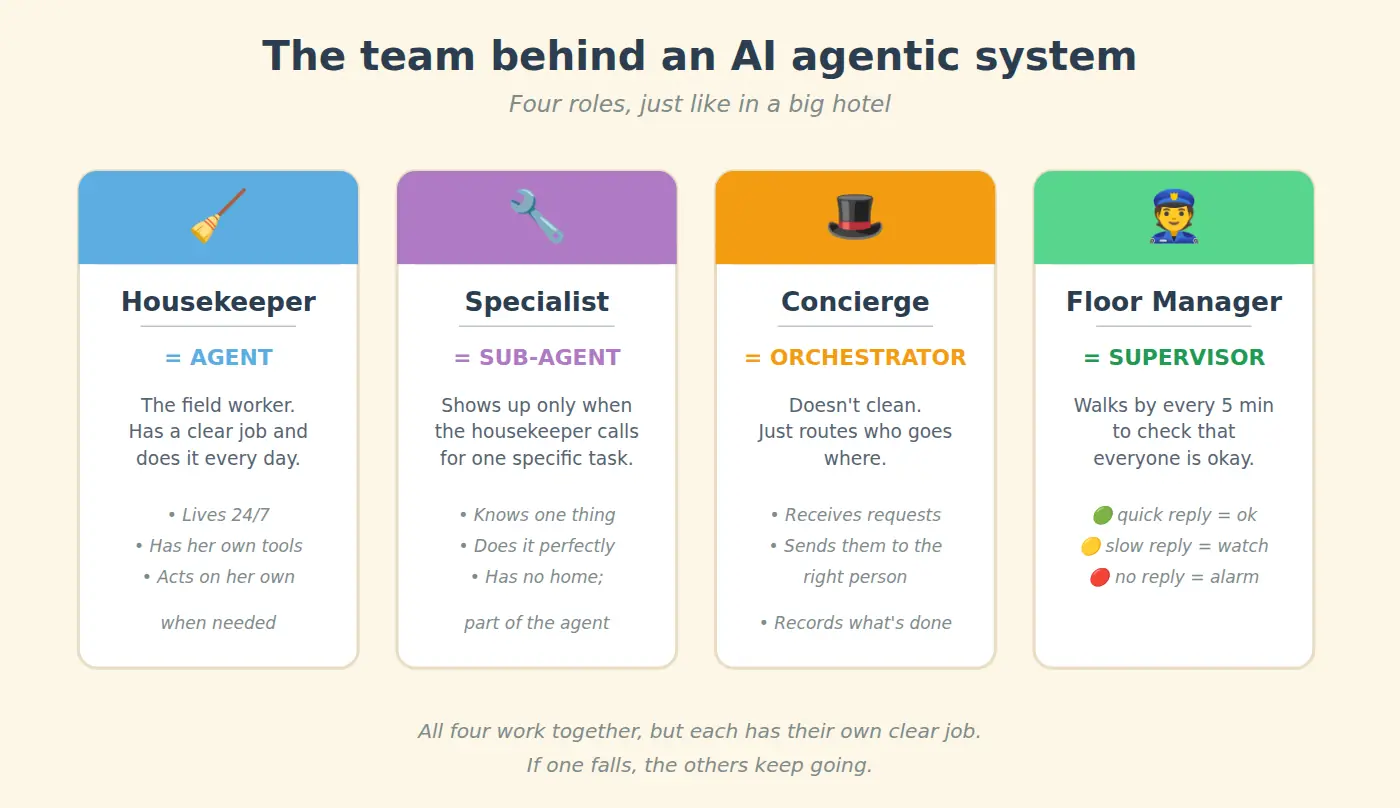
What's actually happening when an Agentic AI system does things for you?
The plain-English guide to AI agentic systems — no jargon, with a hotel analogy. Agents, orchestrators, containers and webhooks explained through concierges, housekeepers and doorbells.
Read more -

Agentic AI Safety Lives in Topology, Not Model Weights
A frontier model passes every red-team eval, then fails in production the moment you wire three of its instances into a deliberation loop. That gap is not a training bug. It is a topology bug.
Read more -

State-Constrained Dispatch Beats Zero-Shot Multi-Agent Routing
Multi-agent systems advertise emergent intelligence, then leak 30+ points of routing accuracy the moment a user types something the prompt never anticipated.
Read more -

Demeter — Buy an AI agent that does your work, hosted in Romania
Demeter is the SaaS platform where you pick from a catalog AI agents (email, contracts, invoices) that work for you 24/7. Data on encrypted S3 in Romania.
Read more -
Approval-driven automation: why yolo automation breaks production ops
The propose-then-act pattern with Telegram inline approval is the safest UX for ops automation. Three real case studies: backups, restart, DNS.
Read more -
Claude Code CLI as agent runtime: a pattern instead of a custom framework
Use the claude CLI as a subprocess for an agent runtime — subscription pricing, native tools, prompt caching, model swap without re-engineering.
Read more -

HG907 quotation engine without LLM: deterministic-legal precision
Why our HG907 quotation engine uses no LLM at all — Decimal precision, ROUND_HALF_UP, and 14 validation rules to guarantee an audit-pass result.
Read more -
MCP server design patterns: how to design a robust Model Context Protocol
Tool naming, response format, error handling, idempotency and rate limiting — concrete patterns for an MCP server used in production by AI agents.
Read more -
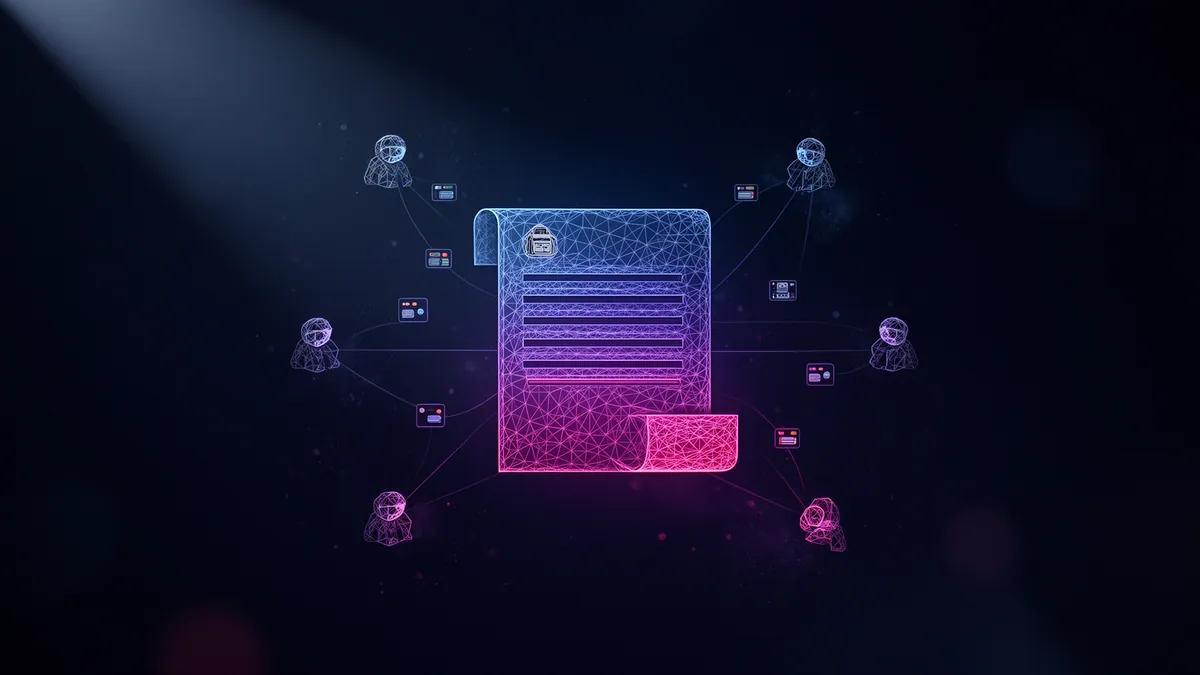
158 AI agents on a single SEAP bid: anatomy of a procurement pipeline
A SEAP bid is not solved with one big GPT prompt. Bid365 runs 158+ specialised agents across 6 systems with dual-pass QA and 11 HITL gates. Here is the architecture and why it matters.
Read more -

Propose-then-act: the architecture of an AI agent for production ops
Why an AI agent that acts without asking is unacceptable in production, and how propose-then-act cuts costs by ~70% while preserving the audit trail.
Read more
Consulting & Discovery 7 Discovery sprints, scoping, AI-readiness audits — how we work with your teams in the first 2-4 weeks.
-

NIS2 in Groups: DNSC Fixes Three Implementation Models
Romania's National Cybersecurity Directorate (DNSC) published a decision on 21 September 2026, in the Official Gazette no.
Read more -

Cyber Readiness Day 2026: NIS2, EU Funding, and Real Investment Priorities
On 15 September 2026, the Microsoft Romania headquarters brings together CIOs, CISOs, CTOs, and compliance leads for a full day focused on what comes after NIS2 transposition.
Read more -

AI Sentiment at Work Fell From 81% to 43%: What Boards Do Now
Two out of five employee reviews mentioning AI in mid-2026 were still positive. In 2019 it was four out of five.
Read more -

When 20% of US Workers Delegate to AI, Governance Becomes an HR Problem
July 2026: a representative Epoch AI/Ipsos survey of 1,106 employed US adults found that one in five now hand at least one work task to an AI model that used to belong to a coworker or contractor.
Read more -

EU AI Act Omnibus: Six Days to Transparency, Nudifiers Out
Six days. That is the runway EU generative AI providers have left before the transparency obligations in the freshly adopted AI Act Omnibus start biting, and every so-called "nudifier" app on the market has until Dece…
Read more -

The EU Regulatory Stack Is a Board-Level Problem Now
Three EU regimes hit the same audit committee agenda this year: NIS2, DORA, and a delayed AI Act. Most mid-market executives still handle them as three separate projects with three separate consultants.
Read more -

2-week Discovery Sprint: how to get a client out of PoC purgatory
A fixed-cost AI sprint: workshop, code/data/infra audit, decision matrix, output PoC plus architecture spec. The full structure.
Read more
Identity & SSO 4 WebAuthn · PKCE · OIDC · Passkeys · mTLS · zero-trust — identity for modern systems.
-

Okta & Auth0 Alternatives for EU Companies (2026)
EU-focused comparison of Okta, Auth0, Entra, Keycloak and a sovereign post-quantum option, scored on CLOUD Act exposure, PQ readiness, attestation and price.
Read more -

Self-Hosting Your Identity Provider: Sovereignty and Security Trade-offs (2026)
An honest look at self-hosting an IdP: control and sovereignty vs ops burden, with a neutral Keycloak vs Authentik vs CAI-AUTH comparison.
Read more -

Phishing-Resistant MFA: Passkeys vs Push vs Hardware
Why TOTP and SMS fail phishing, how passkeys, push and hardware-attested MFA compare, and why attestation is the real dividing line.
Read more -

Hardware Attestation Explained: StrongBox, Secure Enclave & TEE
How hardware attestation proves a key lives in a secure element - StrongBox, Secure Enclave, TEE - and why an identity provider should require it.
Read more